Thai Green Curry Recipe
Thai Green Curry Recipe
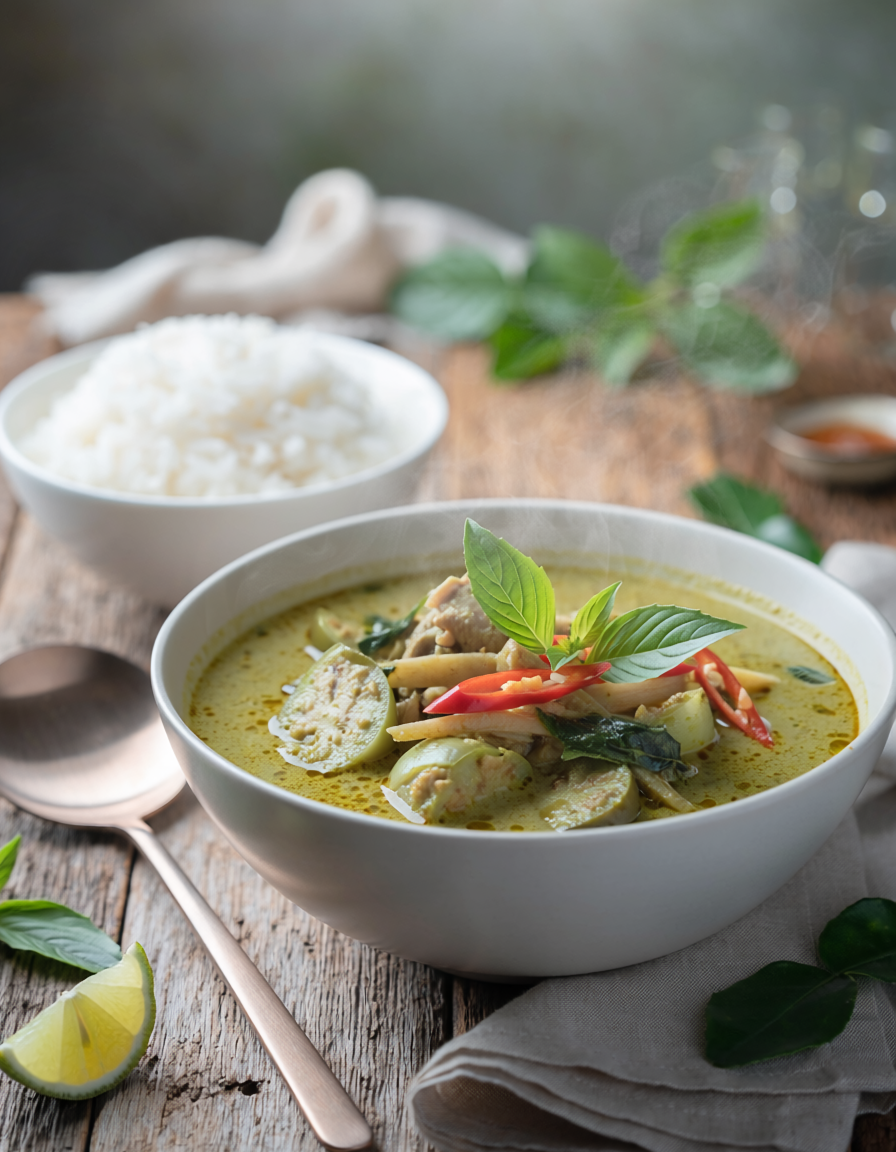
Thai green curry (Gaeng Keow Wan) is one of Thailand’s most aromatic and comforting dishes — a perfect balance of spicy, sweet, salty and fragrant notes. This easy Thai green curry recipe walks you through making a rich, creamy curry using either store-bought or homemade green curry paste, tender chicken or tofu, and classic Thai aromatics like kaffir lime and Thai basil. Ready in about 35 minutes, it’s ideal for weeknights and dinner parties alike.
Why this Thai Green Curry recipe works
By blooming the green curry paste in a little coconut oil, then simmering gently in coconut milk, you release the paste’s essential oils and deepen the flavor. Fresh herbs and torn kaffir lime leaves add bright, authentic notes while fish sauce and palm sugar round out the savory-sweet balance. The result is a silky, fragrant curry with layers of complexity.
Ingredients (Serves 4)
- 1 lb (450 g) boneless skinless chicken thighs, thinly sliced (or 400 g firm tofu for vegetarian)
- 1–2 tbsp vegetable oil
- 3–4 tbsp Thai green curry paste (store-bought or homemade — see note)
- 1 can (400 ml) full-fat coconut milk (use light for fewer calories)
- 1 cup (240 ml) chicken stock or water
- 1–2 tbsp fish sauce (or soy sauce for vegetarian)
- 1 tbsp palm sugar (or brown sugar)
- 6–8 Thai eggplants (or 1 medium globe/Italian eggplant), quartered
- 1 red bell pepper, thinly sliced
- 1 cup canned bamboo shoots, drained (optional)
- 6–8 kaffir lime leaves, torn (or zest of 1 lime + 1 bay leaf)
- 1/2 cup fresh Thai basil leaves (substitute sweet basil if needed)
- Juice of 1/2 lime (optional)
- Cooked jasmine rice, to serve
- Garnish (optional): extra Thai basil, sliced red chillies, cilantro
Quick homemade green curry paste (optional): 6 green chilies, 3 shallots, 3 cloves garlic, 1 stalk lemongrass (white part), 1″ galangal or ginger, 1 tsp shrimp paste (omit for vegetarian), handful cilantro stems, 1 kaffir lime zest, 1 tsp cumin, 1 tsp coriander seeds — pound or blitz to a paste.
Step-by-step Cooking Instructions
- Prepare ingredients: slice the chicken (or press and cube tofu), chop vegetables, tear kaffir lime leaves and pick basil leaves. Open coconut milk and give it a quick stir.
- Heat 1–2 tbsp oil in a wide skillet or wok over medium heat. Add the green curry paste and fry for 1–2 minutes, stirring constantly, until fragrant and the paste starts to release oils. This “blooming” step deepens flavor.
- Pour in about 1/3 of the coconut milk and stir to combine with the paste. Let it simmer gently for 2–3 minutes until the oil separates slightly and the mixture is aromatic.
- Add the chicken (or tofu) and stir to coat. Cook for 2–3 minutes until the meat starts to opaque on the outside. If using tofu, be gentle to avoid breaking cubes.
- Pour in the remaining coconut milk and the chicken stock (or water). Bring to a gentle simmer. Add the eggplant, bamboo shoots (if using), and kaffir lime leaves. Simmer uncovered for 8–10 minutes until vegetables are tender and chicken is cooked through (internal temperature 165°F / 74°C for chicken).
- Add the sliced red pepper and simmer 1–2 minutes more — peppers should remain slightly crisp. Stir in fish sauce and palm sugar; taste and adjust seasoning: add more fish sauce for saltiness, sugar for sweetness, or a squeeze of lime for brightness.
- Turn off the heat and stir in Thai basil leaves. Let the residual heat wilt the basil for the best aroma. Finish with a squeeze of lime juice if desired. Serve immediately with steamed jasmine rice and optional garnishes.
Tips for Best Results
- Bloom the paste: Frying the curry paste in oil and a small amount of coconut milk unlocks deeper flavor than simply stirring it into liquid.
- Use full-fat coconut milk: For the creamiest, most authentic texture, full-fat coconut milk or the thicker coconut cream top is preferred. Use light coconut milk if you’re cutting calories.
- Fresh herbs matter: Thai basil and kaffir lime leaves add unmistakable fragrance. If you can’t find them, add a bit of lime zest and lots of fresh basil.
- Balance the sauce: Adjust fish sauce, sugar and lime to taste — Thai food is about balancing salty, sweet, sour and spicy.
- Don’t over-boil: Simmer gently. Boiling too hard can separate coconut milk and make the curry oily.
- Vegetarian option: Replace chicken with firm tofu and use soy sauce instead of fish sauce (or vegetarian fish sauce).
- Make-ahead: Flavors deepen the next day — store in the fridge up to 3 days. Reheat gently; add a splash of water or stock if thickened.
- Freeze carefully: Coconut milk can separate when frozen; freeze only the curry (without rice) in airtight containers for up to 2 months — thaw slowly in the fridge and reheat gently.
Nutritional Information (Approximate, per serving)
Serving size: 1/4 of recipe (curry only, without rice). Values are estimates and will vary by exact ingredients and brands used.
| Nutrient | Amount per serving |
|---|---|
| Calories | ~500 kcal |
| Protein | ~30–35 g |
| Fat | ~35–45 g |
| Carbohydrates | ~10–15 g |
| Fiber | ~2–4 g |
| Sodium | varies widely (depends on fish sauce) — ~800–1,200 mg |
Note: Adding jasmine rice will significantly increase total calories and carbs per serving. To reduce calories and fat, use light coconut milk and lean chicken breast or tofu.
Final Notes
This Thai green curry recipe is highly adaptable — swap proteins, turn up the heat with extra chilies, or add vegetables like snap peas and baby corn. With a quick prep and an aromatic finish of basil and lime, it’s one of the most rewarding Thai dishes you can make at home. If you enjoyed this recipe, try making your own green curry paste from scratch for next time — it elevates the dish to truly authentic heights.
Happy cooking! If you try this Thai green curry recipe, leave a comment on what you changed and how it turned out.